
After a collision, repairing your vehicle involves much more than fixing dents or replacing damaged parts and Lair's Collision Center are the experts. One of the most important parts of the collision repair process is professional auto paint repair. Proper paint restoration not only improves the appearance of your vehicle, but it also protects the body panels from corrosion, rust, moisture damage, and long-term wear.
When you bring your vehicle into our collision repair facility, you deserve to understand exactly how the paint repair process works and why each step matters. Professional auto paint services are designed to restore your vehicle as closely as possible to its original factory finish while remaining affordable and effective.
Why Paint Repair Is So Important
When your vehicle’s paint becomes scratched, chipped, cracked, or stripped away during a collision, the metal underneath can become exposed to outside contaminants. Rain, dirt, road salt, UV rays, and moisture can all damage exposed body panels and eventually lead to rust or corrosion.
Professional paint repair helps:
- Restore your vehicle’s appearance
- Protect body panels from corrosion
- Preserve your vehicle’s resale value
- Blend repaired areas with the original paint finish
- Restore confidence in your vehicle after an accident
- Complete the collision repair process properly
In many cases, quality auto paint services can make your vehicle appear almost new again after repairs are completed.
Step-by-Step: The Auto Paint Repair Process
Our professional collision repair facility follows a detailed process to ensure your vehicle receives a durable, high-quality paint finish. Each step is important for achieving smooth, long-lasting results.
1. Vehicle Inspection and Damage Assessment
The process begins with a complete inspection of the damaged areas.
During this stage, your collision repair technicians will:
- Examine scratches, dents, paint cracks, and panel damage
- Identify hidden body damage beneath the paint surface
- Determine whether panels need repair or replacement
- Evaluate the extent of paint blending required
- Create a repair plan for restoring the finish
This inspection helps your repair team understand exactly what your vehicle needs before paint work begins.
2. Cleaning and Surface Preparation
Before any paint can be applied, the damaged area must be properly cleaned and prepared.
This step includes:
- Washing away dirt, grease, road grime, and debris
- Removing damaged or peeling paint
- Sanding rough surfaces smooth
- Eliminating rust or corrosion if present
- Feathering paint edges to blend surrounding surfaces
Surface preparation is one of the most critical parts of the repair process because poor preparation can lead to uneven paint, peeling, bubbling, or poor adhesion later.
3. Dent Repair and Bodywork
If the collision caused dents or body damage, technicians complete the necessary structural and cosmetic repairs before painting begins.
This may involve:
- Pulling dents from body panels
- Applying body filler where needed
- Reshaping damaged metal
- Smoothing repaired surfaces
- Ensuring body lines match the original design
Your vehicle’s surface must be completely smooth before primer and paint are applied.
4. Priming the Repaired Area
Once the repairs are complete, technicians will apply primer to the repaired panels.
Primer serves several important purposes:
- Helps paint properly adhere to the surface
- Creates a smooth foundation for paint application
- Seals repaired metal and filler materials
- Protects against corrosion and moisture
- Improves the durability of the final finish
After the primer dries, the technicians sand the surface again to ensure maximum smoothness.
5. Computerized Color Matching
One of the most advanced parts of modern auto paint repair is color matching.
Collision repair facilities use computerized paint-matching systems to:
- Identify your vehicle’s factory paint code
- Match faded or aged paint tones
- Blend repaired panels with surrounding areas
- Replicate metallic, pearl, or specialty finishes
This technology helps ensure the repaired area matches the rest of your vehicle as closely as possible.
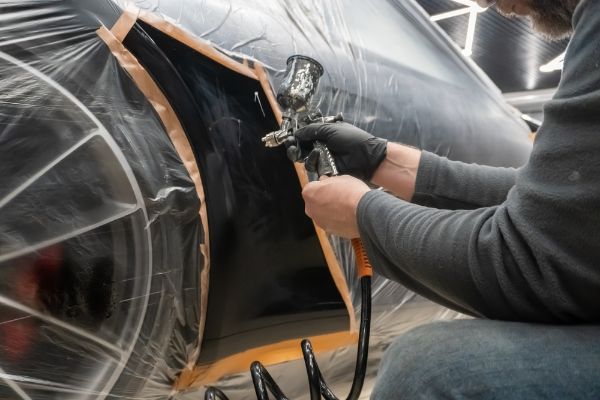
6. Paint Application
Once the paint is mixed and matched, our technicians carefully apply multiple coats of automotive paint using professional spray equipment.
The paint application process may include:
- Applying base coat layers evenly
- Allowing proper flash and drying times
- Blending paint into adjacent panels
- Building consistent color coverage
- Inspecting for imperfections during application
Modern paint booths help control dust, temperature, humidity, and airflow to improve paint quality and consistency.
7. Clear Coat Protection
After the color coat is applied, the technicians add a protective clear coat.
The clear coat helps:
- Protect the paint from UV damage
- Prevent fading and oxidation
- Add gloss and shine
- Improve scratch resistance
- Seal the paint surface for durability
This layer gives your vehicle the polished appearance you expect after collision repairs.
8. Drying and Curing
Once the paint and clear coat are applied, the finish must properly cure.
Depending on the repair process, the technicians may use:
- Heated curing booths
- Infrared drying systems
- Controlled drying environments
Proper curing ensures the paint hardens correctly and achieves long-term durability.
9. Buffing and Final Polishing
After curing is complete, our technicians inspect the paint finish and perform final refinishing work.
This stage may include:
- Wet sanding minor imperfections
- Polishing the paint surface
- Buffing for a high-gloss finish
- Removing dust particles or texture inconsistencies
- Final detailing and cleaning
This step helps create a smooth, factory-quality appearance.
10. Final Quality Inspection
Before your vehicle is returned to you, the repair team performs a complete quality inspection.
Technicians verify:
- Paint color consistency
- Surface smoothness
- Proper panel alignment
- Finish quality under different lighting conditions
- Overall repair appearance
This final inspection ensures your vehicle leaves the shop looking professionally restored.
Affordable Paint Repair That Restores Your Vehicle
Professional auto paint services at Lair's Collision Center are available to every driver involved in a collision repair situation in Monmouth. A quality collision repair facility understands that paint restoration needs to deliver both exceptional results and affordability.
Our auto paint team works hard to keep you informed throughout the repair process while restoring your vehicle’s appearance as closely as possible to its original condition. Whether your vehicle has scratches, chipped paint, major panel damage, or complete collision repairs, professional paint repair at Lair's Collision Center helps restore both the appearance and protection your vehicle needs.
With the right collision repair and paint restoration process, your vehicle can leave the shop looking clean, polished, protected, and ready for the road once again.